Inside the Disrupticon
A Stinging Rebuke

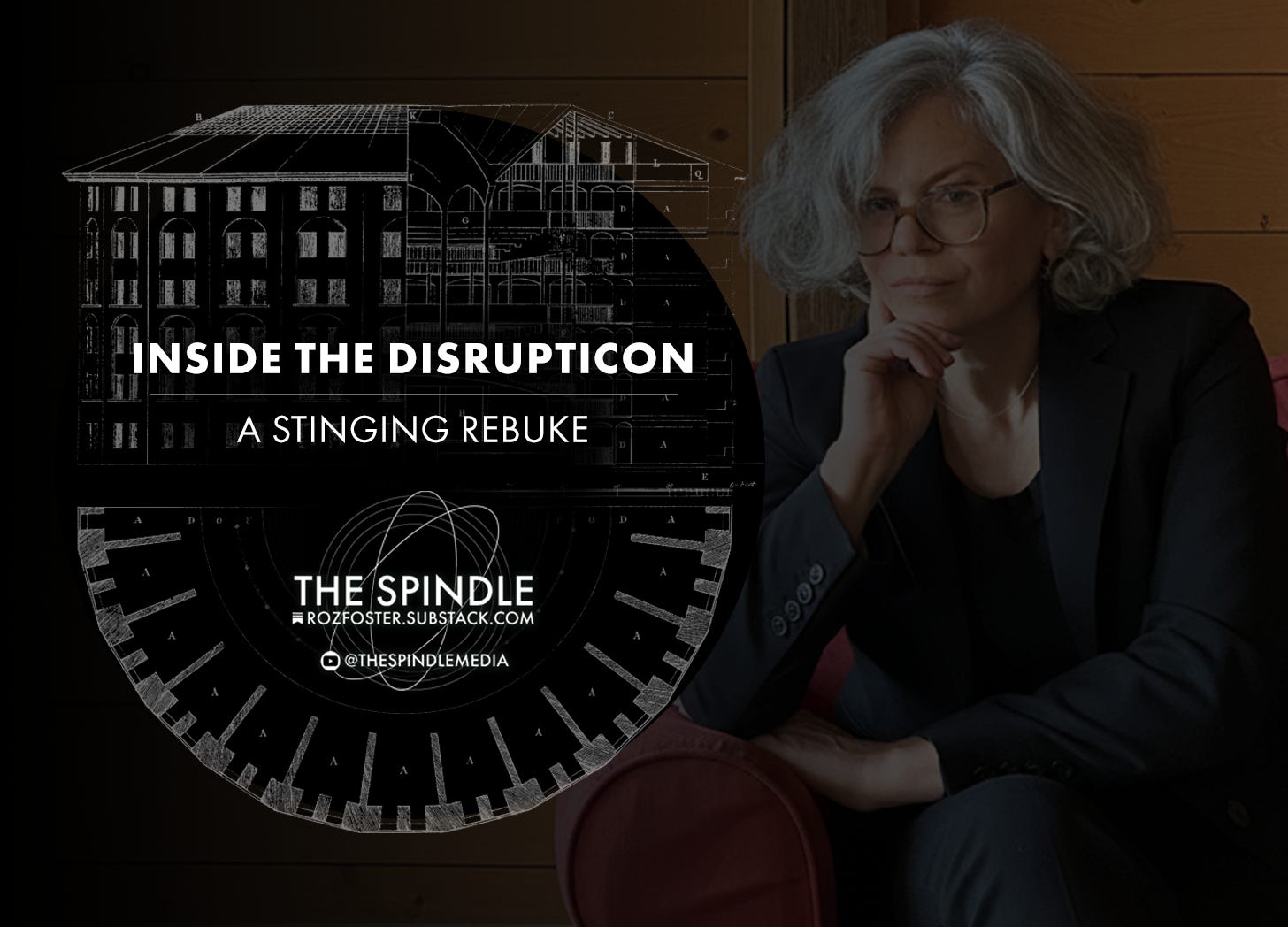
Imagine a Glass Enclosure
What if you were enclosed inside an orbicular glass screen with all the world’s conflicts playing out on its inner surface? Picture it. Imagine you’re inside a globe of glass where all the geopolitical dramas of the day play across the inner surface. Imagine these international power struggles play out on the same curved surface as your own. The glass sphere live-streams and maps out earth-shaking, transnational fault lines on the same, smooth glass plane as your own personal, ever-shifting issues. It shows you the responsibilities you’re shirking, your regrets, your limits, your vices. All the ways you and the world’s leaders are failing are laid bare, broadcast, and repeated on the glass all around you.
Don’t worry. It’s just a thought experiment. A metaphor to explain an idea.
Most days inside the enclosure, you’re alerted to your family’s dramas the second they erupt. The glass gives you updates on the histrionic rivalries between your friends and tech CEOs. You manage difficult customers and associates on the same glass plane as you deal with a relentless, urgent flow of worldwide, internecine cataclysm. You can’t believe the outlandish thing that nutty world leader said, looking right into the glass. You have meetings with colleagues through the glass, you attend meetings at Davos through the glass about the glass that you could have been a contributing panelist for. You use the glass all the time. You have a lot to say about the glass. The glass is always involved.
Plus ça change
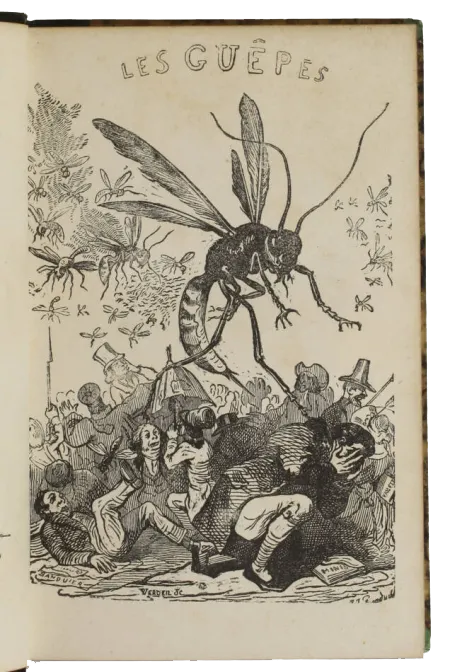
Plus ça change, plus c’est la même chose. The phrase “The more things change, the more things stay the same,” was coined by the French novelist Jean-Baptiste Alphonse Karr in a January 1849 issue of his serial journal, Les Guêpes, or The Wasps. The journal contained Karr’s own satirical essays, which he published himself. It was kind of a mid-19th century, French version of a Substack newsletter. He called it The Wasps because his thoughts on French society were meant to sting.
The January 1849 issue was Karr’s reaction to a pattern he’d begun to notice in French history. The uprising the year before, in February of 1848, had been the third major revolution against monarchical rule since 1789. In 1789, the powerless 99% paid all the taxes while the one percenters paid barely any—and had all the power. Inspired by the American Revolution and by the ideal of individual freedom, the French revolted against the monarchy, storming the Bastille.
In 1814, after the Napoleonic period, the House of Bourbon reestablished the monarchy. By 1830, the people rose again to topple it in the Second French revolution, or the July Revolution. That revolution installed the July Monarchy and the ‘citizen king,’ Louis Philippe I, who swore he wasn’t the King of France, but declared himself the “King of the French,” which was supposed to be different. Louis Philippe I was la roi of a constitutional monarchy and had limited powers.
By February of 1848, the poor were still hungry and had no formal, civic voice. When the French government banned political gatherings in Paris, crowds flooded the streets. The prime minister resigned and the monarchy was overthrown for a third time, this time for good. But in June of the same year, Paris saw yet one more rebellion. That December, Bonaparte’s nephew, another Napoleon, the dude with the famous name, was proudly and loudly democratically elected as president.
Watching the dynamics of power play out over time, Karr wasn’t convinced things would be different this time, and he coined the phrase, plus ça change.
A few years later, like clockwork, Louis-Napoleon Bonaparte proclaimed himself Emperor.
In 422 BC, Aristophanes produced his comic play, Wasps. The chorus dressed like a swarm of the winged, stinging insects, a visual metaphor lampooning the Athenian elders of the poet’s time. The waspy old men of the chorus had spent their glorious youth fighting for Athens and were now driven to exercise their civic duty as jurors with pride. They were portrayed as being obsessed with, even addicted to, judging law-breaking dissenters in the public spectacle of the Athenian courts, swarming and stinging the accused.
Aristophanes thought the old codgers had been duped into supporting Cleon, a powerful Athenian politician. Cleon came from a commercial family and would be one of the first in history to lead Athens without ascending from political heritage. Aristophanes characterized Cleon as duplicitous and corrupt, a liar of a leader who swore up and down he was in service to the people. In the play, Cleon keeps most of Athens’s wealth for himself and his cronies, paying his loyal jurors a pittance of three obols a day.

The Disrupticon: Why You’re in Perpetual Survival Mode
Today, a new outrage hits you every 60 seconds. Inside the glass, the Disrupticon surrounds you on all sides. A friend texts you with breaking gossip. You swipe away to see the news that just broke about another diabolical corporate revenge plot. All of a sudden, the glass blares so loudly that you’re still trembling several minutes later from an Emergency Alert test. The market’s winning streak is too long! Buy gold! Buy gold! Oil’s up. Oil’s down! A violent churn of colored, flashing light, barbaric shouting, sirens, ringing, dinging, pinging and now shots, shots! Shooter! Explosions, shattered glass, bombing, fast boats, massacres, flailing robotic arms, looming swarms of autonomous, lethal drones, data-centers clash and crash across the smooth, internal surface of the encircling glass.
Naomi Klein’s book, The Shock Doctrine describes the way in which the disorientation of a population following wars, natural disasters, or terrorist attacks were used to assert American imperialist corporate foreign policy, exploiting residents quickly and effectively for economic gain before the people could think well enough to question it. Right now, Big Tech looks as if it’s applying a similar doctrine but it’s a domestic operation, as much as it is global one. We’re battered with what comes across the glass: fits of public rage turn into feedback loops of furious indignation and violent screeds. There are constant threats to the economy, dangers to our kids, their futures, their jobs, verbal and visual assaults. We’re obsessed with keeping up, addicted by it; it’s our civic duty to have a sharp, strident opinion about it all.
And yet most of us are too disoriented and overwhelmed to really think straight, stuck in never-ending shock, in survival mode. In The Body Keeps the Score, Bessel van der Kolk collects learnings from his and others’ research and clinical practices that show abuse creates a chronic alarm system shaping the body and mind into one that remains in a perpetual state of vigilance, ready to fight, flee, or freeze. This constant state of high alert damages focus, the ability to engage in reflection, in deep critical thought. Chronic stress of this kind diminishes the capacity to control your thoughts and behavior—to consciously and carefully interrogate your perceptions and beliefs, to think clearly before you speak or post, to discern the origins of the impulse to click to buy, to locate your core internal authority before deciding how to vote.
The speed and jarring effects of AI disruption, along with the shock and awe of the media, delivered by devices and software designed and developed by Big Tech, keep you in this state of chronic, alert alarm. The communications system we’re all networked to, the hardware and software of the Disrupticon, the devices and the graphical user interfaces, are expressly designed to incite powerful, automatic and unconscious survival responses. Neuroscientists have been clear about the effects of dopamine addiction, how an infinite social media scroll is like pulling a slot machine lever over and over for the dopamine hits. Social media activates the nucleus accumbens, or the “pleasure center.” Repetitive hits to this part of the brain lower the frontal cortex’s capacity to resist. But something else, something deeper is being repeatedly hit: the amygdala, the “fight or flight” center.
Bessel van der Kolk’s work, along with Joseph LeDoux’s on the amygdala, The Emotional Brain, suggests that if you can activate the amygdala, you can gain rather reliable control over the human mind. If you really want to get control over someone’s thoughts and actions, if you want people to act on your behalf, you go for the amygdala. Put the brain in constant peril and you have people ready to fight, flee or freeze, bypassing rational, conscious thought and behavior. You have a rapt audience, wide-eyed like cornered animals. If you had a device, an interface, say, that could channel those powerful, unconscious, impulsive, survival responses, then, voilà—chère guêpe, mon semblable, mon frere!—you’d have a near totalizing control.
Let’s see what happens inside the glass when your amygdala is repeatedly shocked.
If your instinct is to take flight from danger, you can’t escape the glass, so you scroll yourself into deep holes and bury your head in the silicon sand of TikTok and Instagram. Maybe you play back-to-back games on Roblox, or you buy with one click compulsively.
If you’re the type to freeze when you’re threatened, you’re so scattered by distractions, so battered by dire warnings, so shaken by the shocks of the day, you get paralyzed with indecision, go apathetic with helplessness. You might oscillate between this content management system and that, making to-do list after to-do list. But what can you really do?
If you tend to fawn (a trauma response only recently introduced), you praise and celebrate the inventors and maintainers of the glass, the very perpetrators of your endless abuse. You aspire to be more like them. Even though they’re extracting your wealth and that of the rest of the masses, you practically pray to them as if they’re a new pantheon of tech gods.
If you got this far, you’re probably on the side of the fighters. You might try to do something productive with your aggression, like write a tech-skeptical newsletter from inside the glass, where you think you’re writing important truths, informing the masses. But you’ve been duped, funneled straight back into the glass where your intellectual salience is neutered by forced complicity. You have to use the glass after all.
Or you might be the kind of fighter that’s so pissed off about your impotence, you troll the glass, which the algo scales up into a digital dogpile, which makes you feel powerful! You’re practically standing amongst pantheon of tech gods! You and them, a team on the glass! But what’s really happened is your alpha rancor has been neutered by the multitude of betas all shouting the same thing in unison, all praising the same line-up, all of you, a blur of smooth, glassy sameness.
Meaning Inside the Glass
In trying to spread the word about my tech-skeptical essays and the video journalism I’ve been working on, I sometimes suspect the glass of throttling me, shadowbanning, downranking, deboosting. At the end of January, one of my YouTube explainers got more views than usual. The video analyzed the motivations behind Big Tech’s forceful rebranding of nuclear power. I was examining the startling amount of electricity data centers needed and the political power Big Tech was gaining over national energy policy. Google, which owns YouTube, wasn’t directly mentioned, but was clearly implicated.
The video warned of the dangers of excessive power draws on the Mid-Atlantic grid coming from data centers in the region. I posted it on the eve of a major Nor’easter. The residents of thirteen states, plus DC—67 million people—would rely on the overtaxed Mid-Atlantic grid for their electricity and heat during the storm. Many of them, many of you, would shortly be snowed in, stuck inside with nothing but the glass to look at. As the snow fell, blanketing the Mid-Atlantic, views on the video spiked. It was the first time I understood, not just conceptually but viscerally, the type of content the Disrupticon is designed to perpetuate. Alarm. A threat to people’s lives.
A day later, almost all the views on that video had vanished, tagged by YouTube as “Illegitimate.”
A more accurate tag would have been: Delegitimized.
This is the video:
My writing and video production work inside the glass are, at least in part, my way of writing meaning back into my literary life. It’s partially an effort to make up for what’s being lost in the book industry. We’ve seen IP theft without real compensation or accountability, inadequate attempts to prevent the use of books for AI training, the automation of important literary work like translation, editing, writing itself, AI-generated book design and cover art, algorithmic marketing boosting big names and last year’s trends, subscription services diluting the individual value of books, audiobooks designed to compete with TikTok’s audience, and data-driven decision-making at the highest corporate tiers aimed at scaling all of these things way up. These changes are being dictated by the glass. As a result, the power of great books of literature to develop well-honed, deep-thinking, highly creative human minds is being throttled, shadowbanned, downranked, deboosted—delegitimized as a quaint custom from an outmoded past.
My M.O. has always been to think well, to analyze cultural shifts, to look closely at the power of media to deceive and shape minds, move the masses. I like being able to see the culture industry for what it is. I do my best to retain the capacity to think for myself and wield individual authority over my own life. I’m not always successful. But it’s fulfilling and meaningful for me to share and exchange insights, to work inside the glass, and to show others how to see it, how to really see the glass from inside of it.
I’m compelled by how the mental models of our reality are produced, mediated, manipulated, bought and sold. We’re inside that manipulated, manufactured reality now and it wasn’t created by the masses, it isn’t governed by the people. Throughout history, human reality—or the generally accepted consensus of how things are, how things work—is always created and governed by a small collection of people who hold power. If you aren’t one of them, the best course, it seems to me, is to be conscious of the workings of human power dynamics, and to learn how to think critically, creatively, and well so that you’re more consciously in control of your own thoughts, more aware of the motivations behind your speech and behavior.
The Disrupticon, the metaphor of a glass enclosure, appears to be the most persuasive, pervasive, and totalizing use of the culture industry in history to wield accepted, centralized power at a nearly complete global scale. History tells us that duplicitous Cleons and Napoleons who wish to declare themselves Emperor seem to come and go, but power dynamics are the same. In this era, centralized power has gathered in and is being wielded by the upper echelons of Big Tech. A pantheon of self-made, self-declared kings are making the rules relatively unopposed; instead, they’re mostly praised, cheered on and championed. It’s their glass that batters you into addled, exhausted submission. Their glass coerces you into giving up your agency by telling you that using the glass is how you’ll regain it. Their glass forces you to strap yourself into the enclosure and compels you to secure the buckles of your own harness good and tight.
In my need for meaning and purpose in my life, I try to offer legitimate critiques for others to use in their own autonomous lives. I ask grounded, incisive questions about the reality we’re all in together. But I’ve begun to wonder if I’m only creating virtual venom for other sharp-minded wasps to sting the glass with. We swarm and we sting this chemically-strengthened, utterly transparent and impenetrable aluminosilicate glass.
THE SPINDLE IS BROUGHT TO YOU BY BOOKS: